

How To Install Alsa Ubuntu
PulseAudio is a audio server for Linux and Mac OS. It likewise works on Windows operating organisation. It works similar a proxy. The sounds in your applications passes through PulseAudio. That mode, you can use diverse techniques to manipulate these sounds before you tin can hear them.
PulseAudio tin combine sounds from multiple sources (called mixing). It can change the audio format, increment or decrease sound channels. It tin besides send the audio of one computer to another estimator. PulseAudio is basically a very powerful network based sound server for Linux, Mac Os, and Win32 systems.
In this article, I will bear witness you how to use PulseAudio to Manage Sounds on Ubuntu 18.04 LTS. Let'due south get started.
Enabling Software Sources:
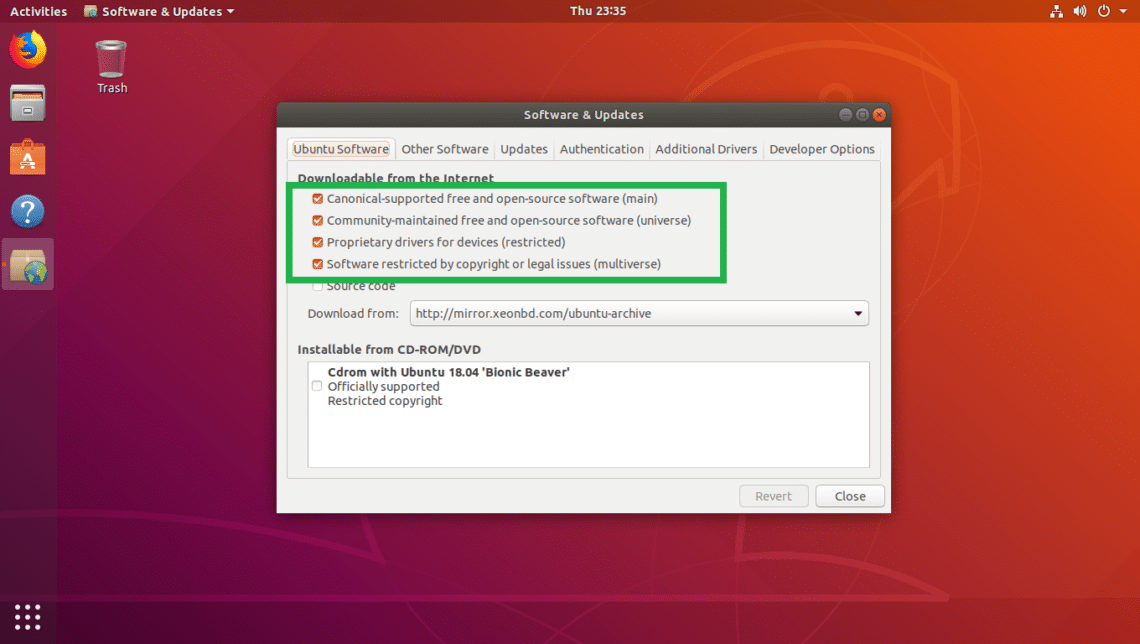
You have to make certain that master, restricted, universe, and multiverse software sources are enabled on your Ubuntu 18.04 LTS machine first as some of the packages you will demand to install are in these software sources.
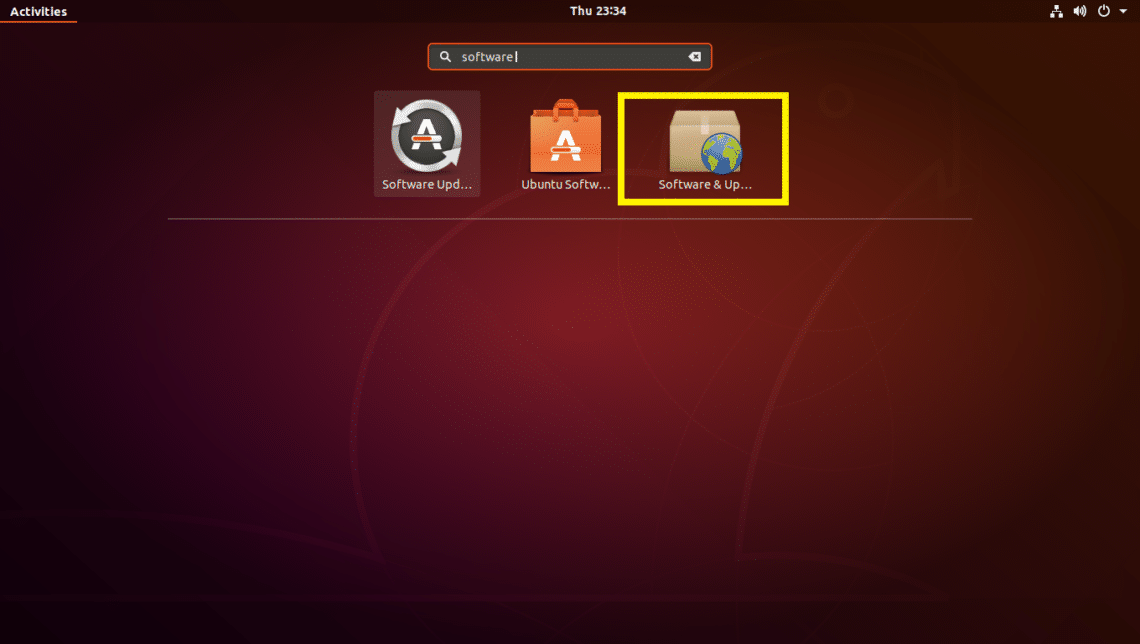
You tin can use the Software & Updates app to enable these software sources graphically. Find Software & Updates from the Application Menu and open it.
At present in the Software & Updates app, make sure the marked checkboxes are checked.
In one case y'all're done, close Software & Updates and update the APT package repository cache of your Ubuntu 18.04 LTS automobile with the following control:

The APT package repository cache should be updated.

Installing PulseAudio on Ubuntu 18.04 LTS:
Ubuntu eighteen.04 LTS uses ALSA for sound management by default. You tin easily replace it with PulseAudio sound server.
PulseAudio is available in the official packet repository. So it's easy to install.
You can install PulseAudio with the post-obit command:
$ sudo apt install pulseaudio

Now press y then press <Enter>.

PulseAudio should exist installed.

Now reboot your computer.
Using PulseAudio Volume Control Graphical Utility:
PulseAudio has a graphical frontend PulseAudio Volume Command, which you can use to easily configure PulseAudio sounds graphically.
It is bachelor in the official package repository of Ubuntu eighteen.04 LTS, but not installed by default.
Run the following command to install PulseAudio Volume Control on Ubuntu 18.04 LTS:
$ sudo apt install pavucontrol

Now press y and then printing <Enter> to continue.

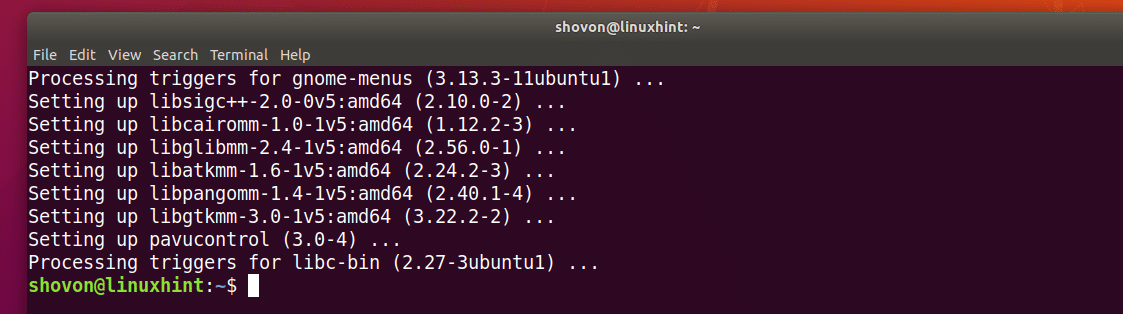
PulseAudio Volume Command should exist installed.
Now you can open PulseAudio Book Control from the Application Menu of your Ubuntu 18.04 LTS.

This is the PulseAudio Volume Control graphical utility.
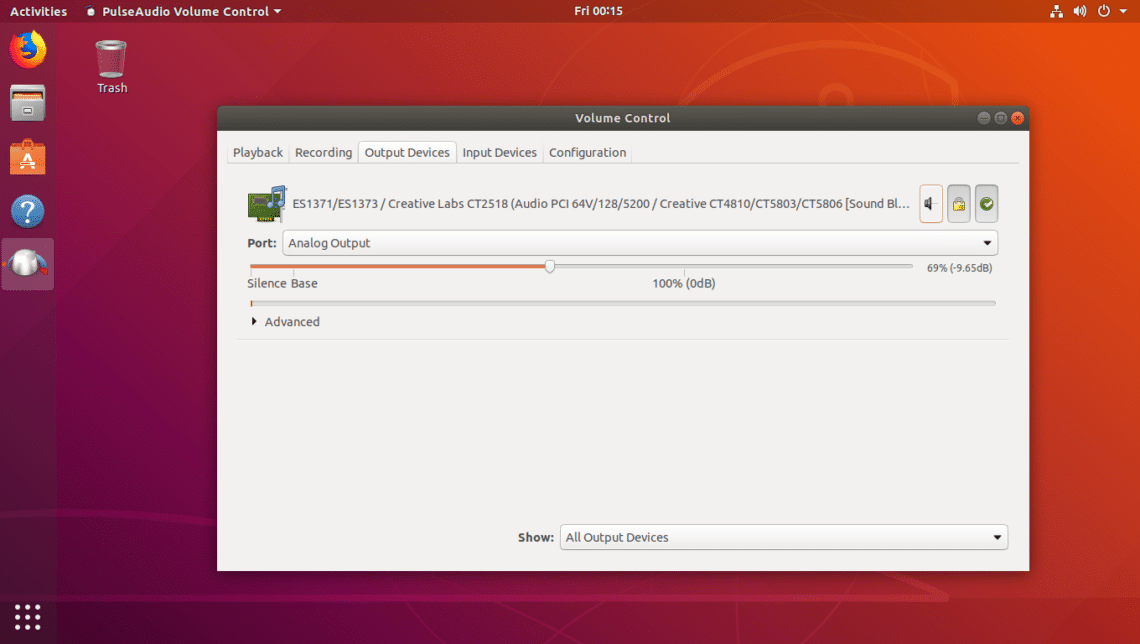
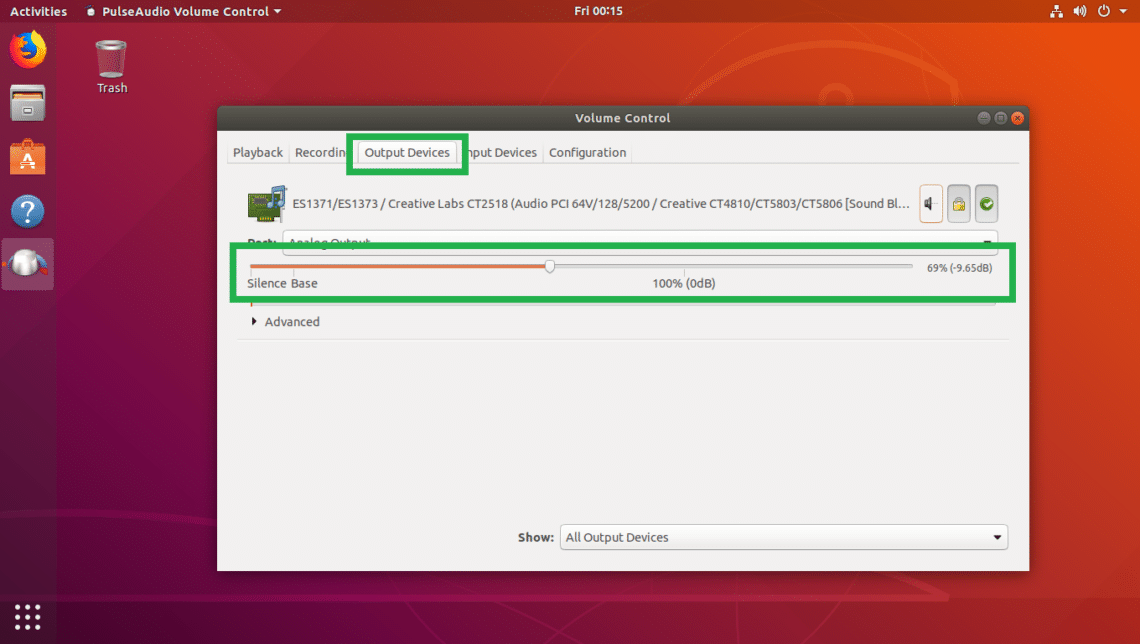
Yous can configure the sound output from the Output Devices tab. You tin can drag the marked slider to the left to subtract the output audio, and drag it to the right to increase the output audio.
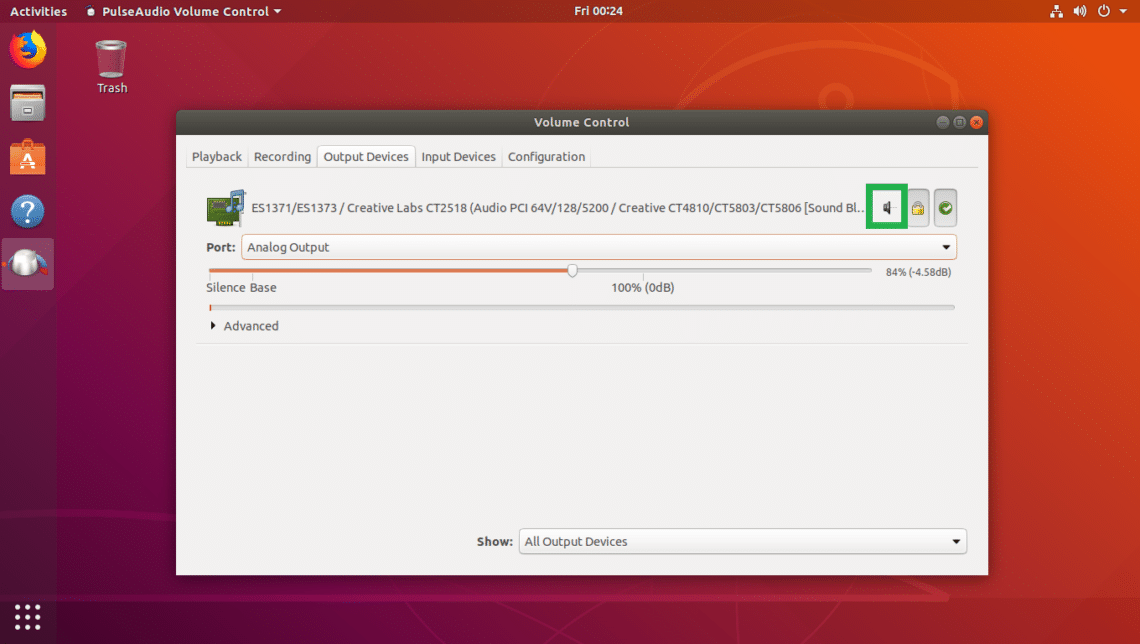
You can Mute and United nations-Mute the sound by clicking the marked toggle button in the Output Devices tab.
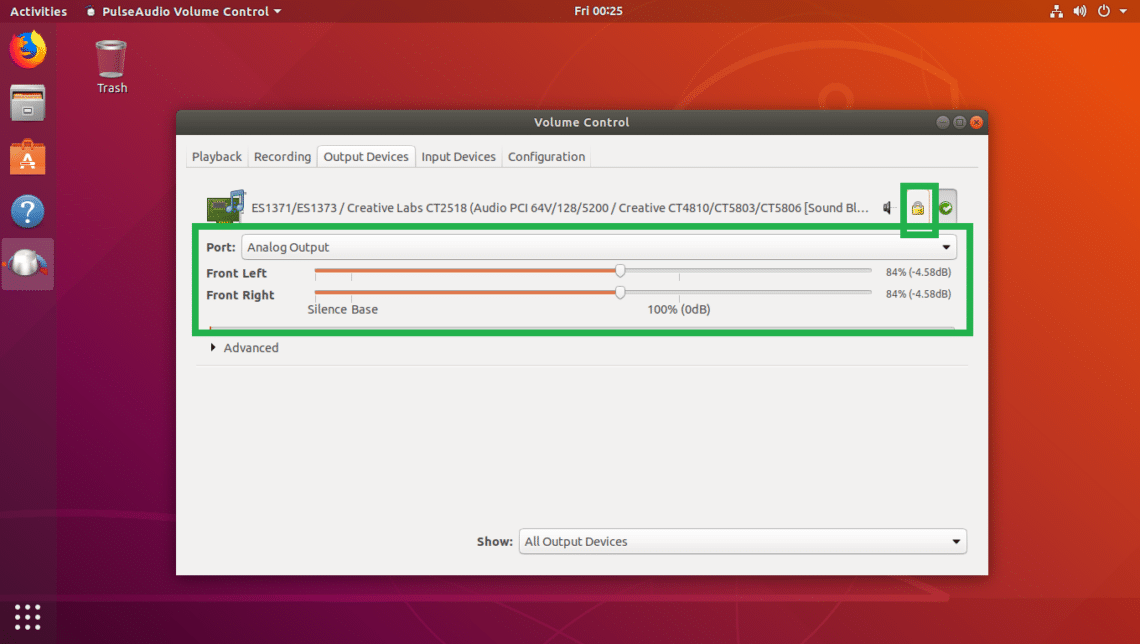
PulseAudio lets you command the left and right speakers separately. Just click on the lock toggle icon in the Output Devices tab and you should encounter two separate sliders as marked in the screenshot beneath. You can drag them left and right every bit till you get the result y'all want.
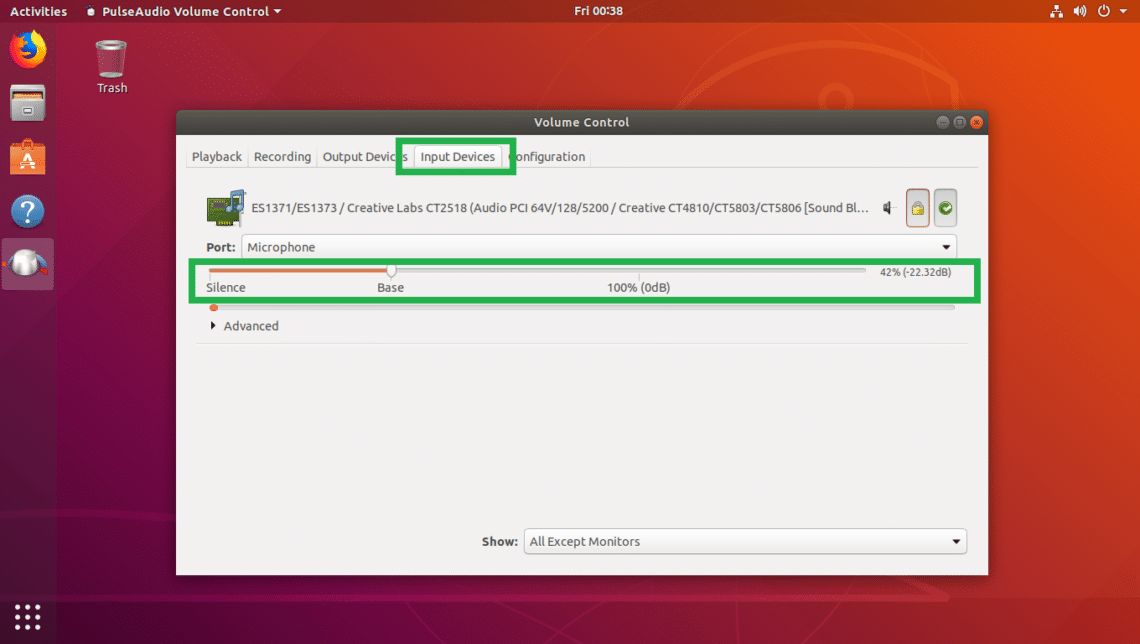
You tin can control sound input devices from the Input Devices tab. You can elevate the slider to the left to subtract the recording volume, and drag the slider to the right increase the recording volume for your default recording device, which is in my instance the Microphone.
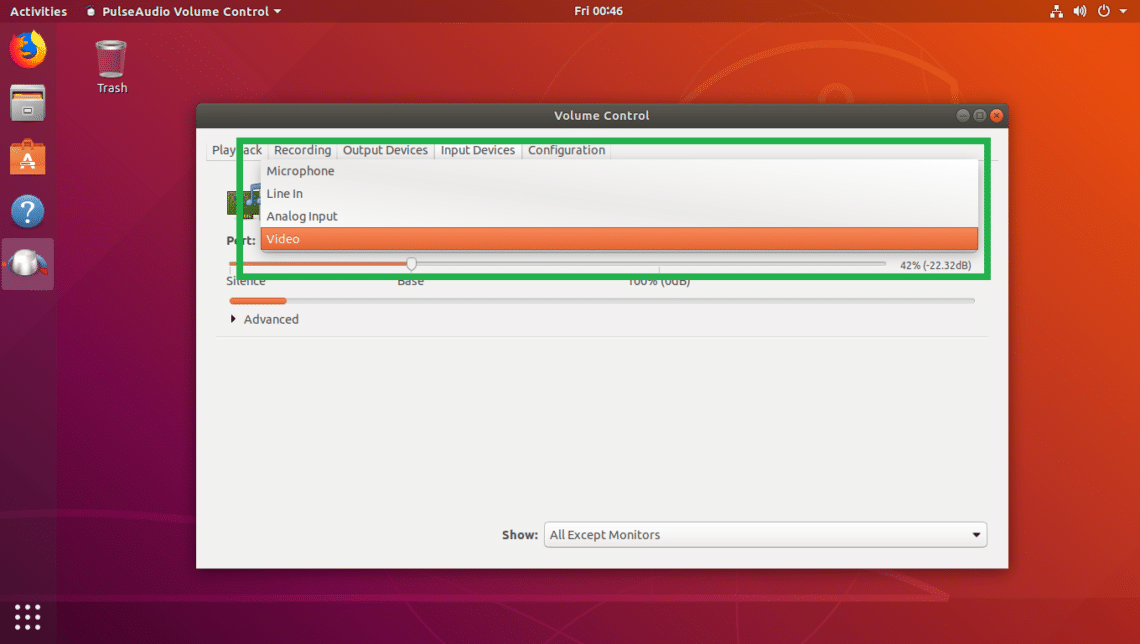
You lot can select more than devices from the Port dropdown menu as you can see from the screenshot below. You can configure sound inputs for Microphone, Line In, Analog Input and Video.
Simply like for the output devices, yous can configure the left and right channel separately for the input devices besides. Just click on the lock icon and two sliders should appear as marked in the screenshot beneath.

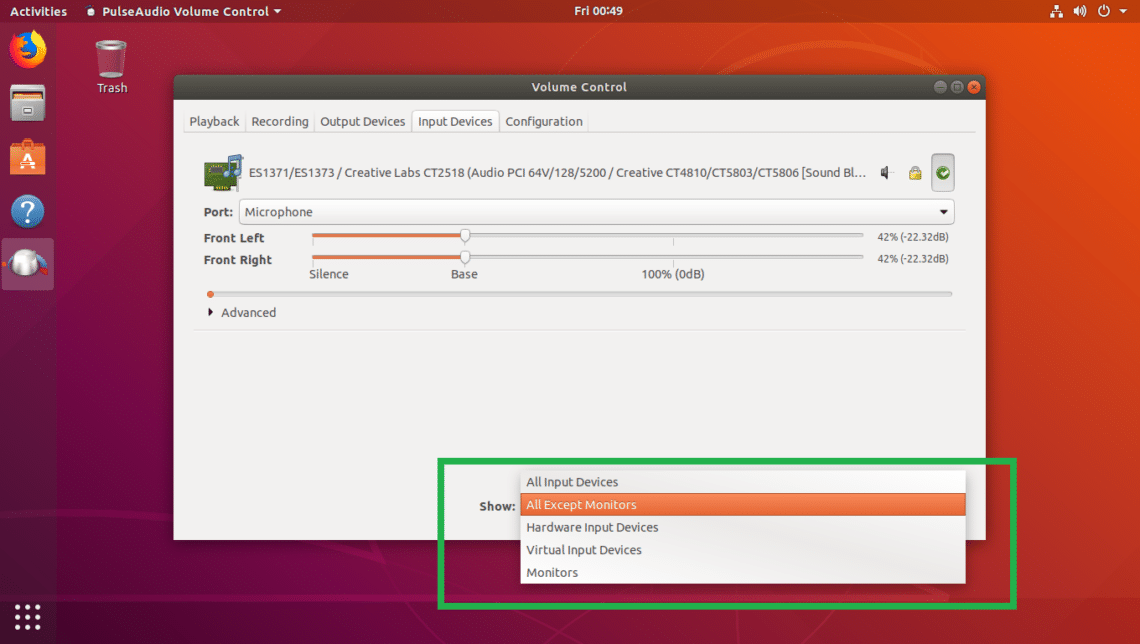
You lot can control what input devices you want to see in the Input Devices tab using the Show drop downward bill of fare equally you tin see in the screenshot below. If yous accept many types of sound input devices installed, this should be a good feature for you.
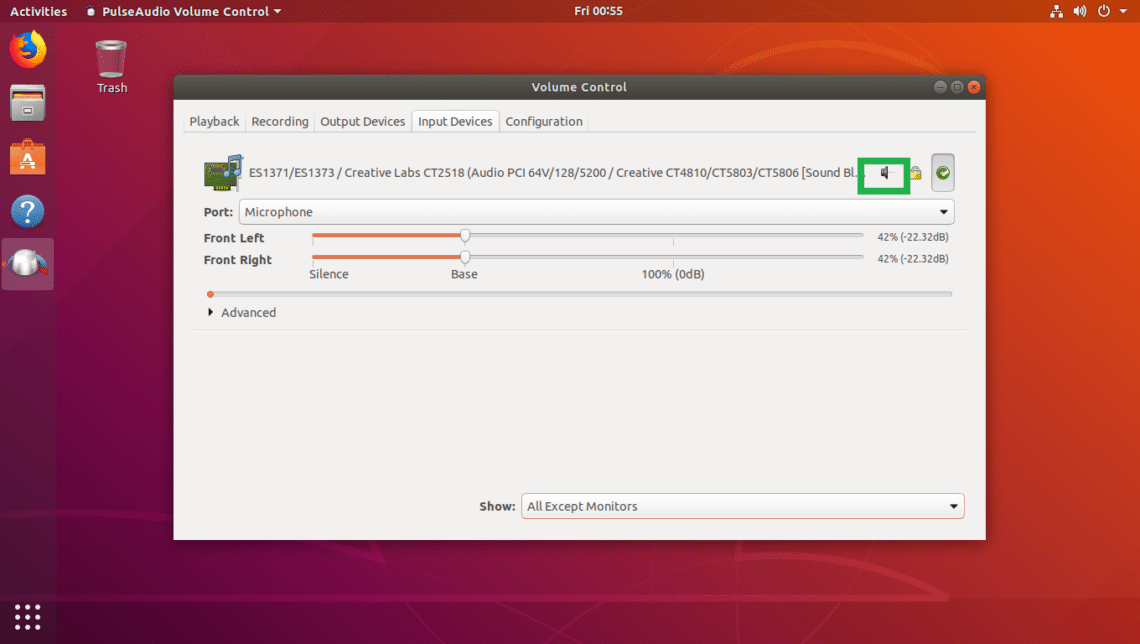
You can besides click on the marked toggle icon to Enable or Disable sound recording.
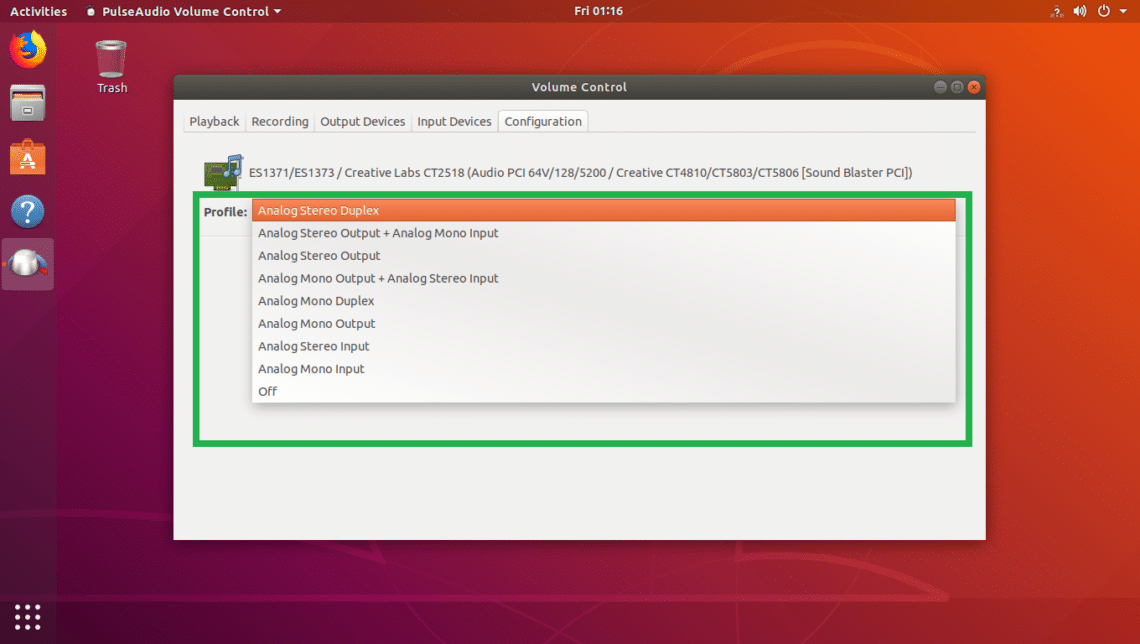
You can change sound profiles from the Configuration tab of PulseAudio Volume Control app. Every bit tin see from the screenshot below, there are many audio profiles bachelor past default. Analog Stereo Duplex is the default audio profile.
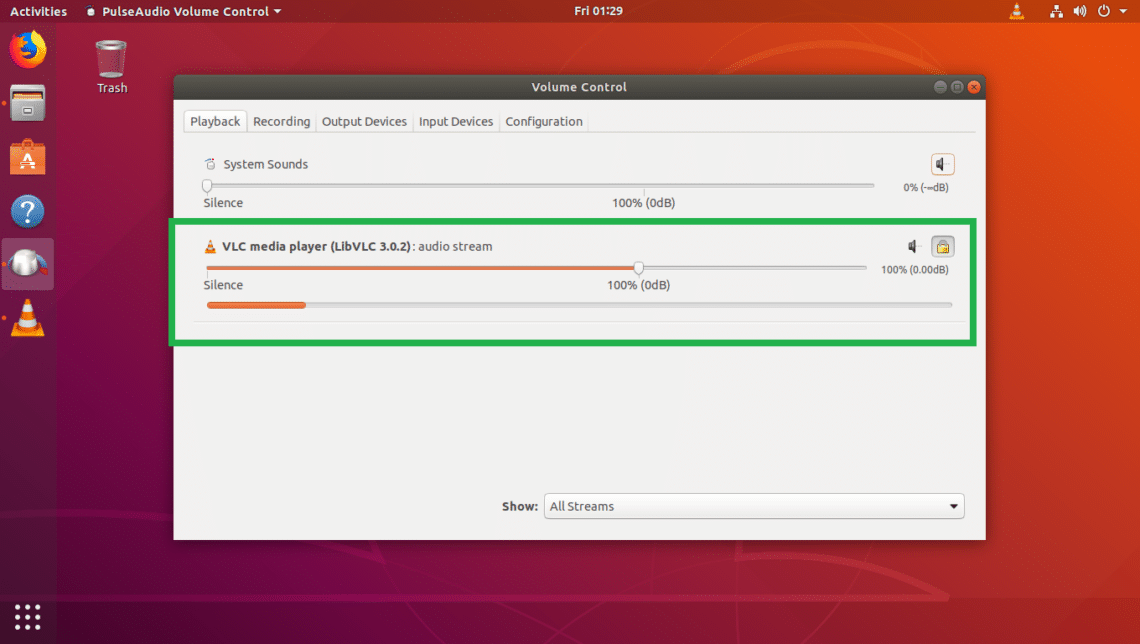
You can control sounds for individual applications from the Playback tab of PulseAudio Book Control. when y'all're running media files using any media player application on Linux, it should show upwardly in the Playback tab. Yous tin then elevate the slider for that specific awarding to the left or correct to command the sound volume of only that application.
I am playing a music with VLC Player, and it showed up in the Playback tab of PulseAudio Volume Control as yous can see from the marked section of the screenshot below. At present I can motility the slider to the right to increment the sound volume, or to the left to decrease the sound volume.
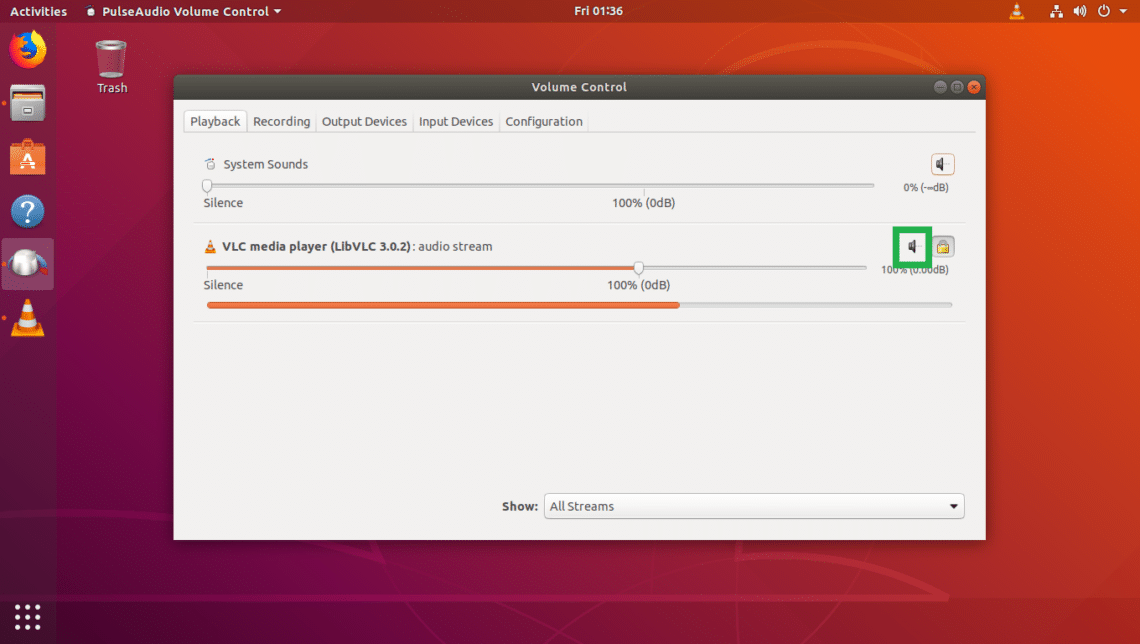
I can click on the marked toggle button to Mute and Un-Mute audio for VLC player as well.
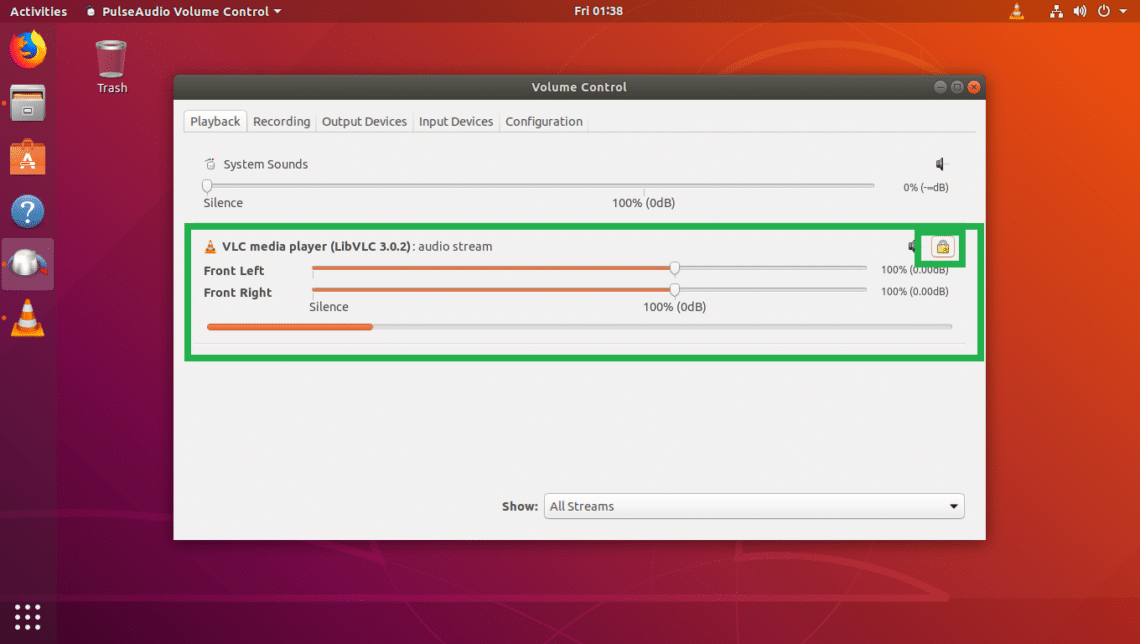
I tin even control the left and right sound channels of VLC player separately after clicking the lock toggle icon as you tin can see from the marked section of the screenshot below.
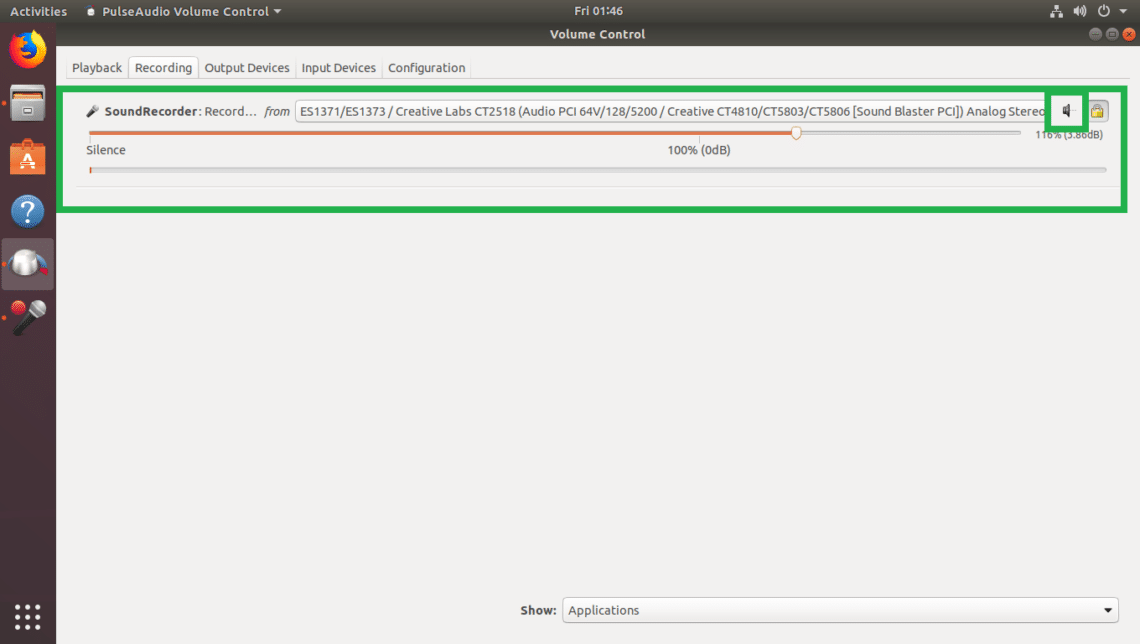
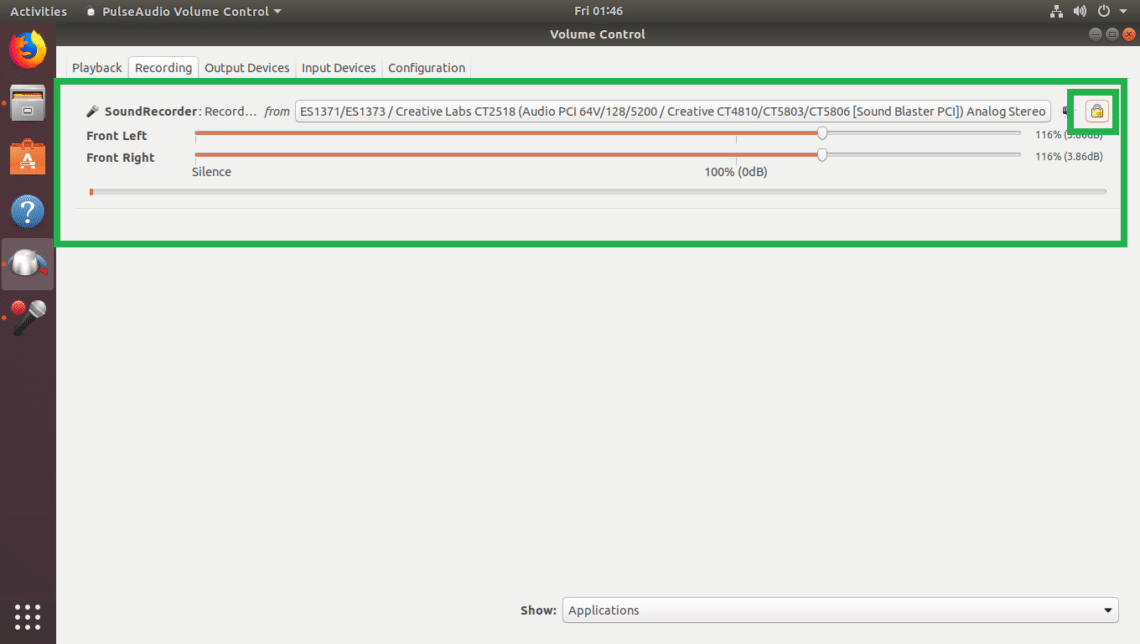
You lot tin control your sounds using PulseAudio Book Control while recording also. You can notice the currently recording controls on the Recording tab of PulseAudio Volume Control app.
I am recoding voice using GNOME Recorder and equally you can come across from the marked section of the screenshot below, it shows up in the Recording tab of PulseAudio Volume Control.
But like before, y'all can drag the slider to the left or right to control the recording book for the sound recorder app.

Yous can fifty-fifty click on the marked toggle push to Mute and Un-Mute the sound of the recording app.
You can also control the left and right sound channels separately but as earlier.
That's how you use PulseAudio on Ubuntu xviii.04 LTS to manage sounds. Thanks for reading this commodity.
About the author

Freelancer & Linux Organization Administrator. As well loves Web API development with Node.js and JavaScript. I was born in Bangladesh. I am currently studying Electronics and Communication Engineering at Khulna Academy of Engineering & Technology (KUET), ane of the demanding public engineering universities of Bangladesh.

Source: https://linuxhint.com/pulse_audio_sounds_ubuntu/
Posted by: wootencized1957.blogspot.com
0 Response to "How To Install Alsa Ubuntu"
Post a Comment